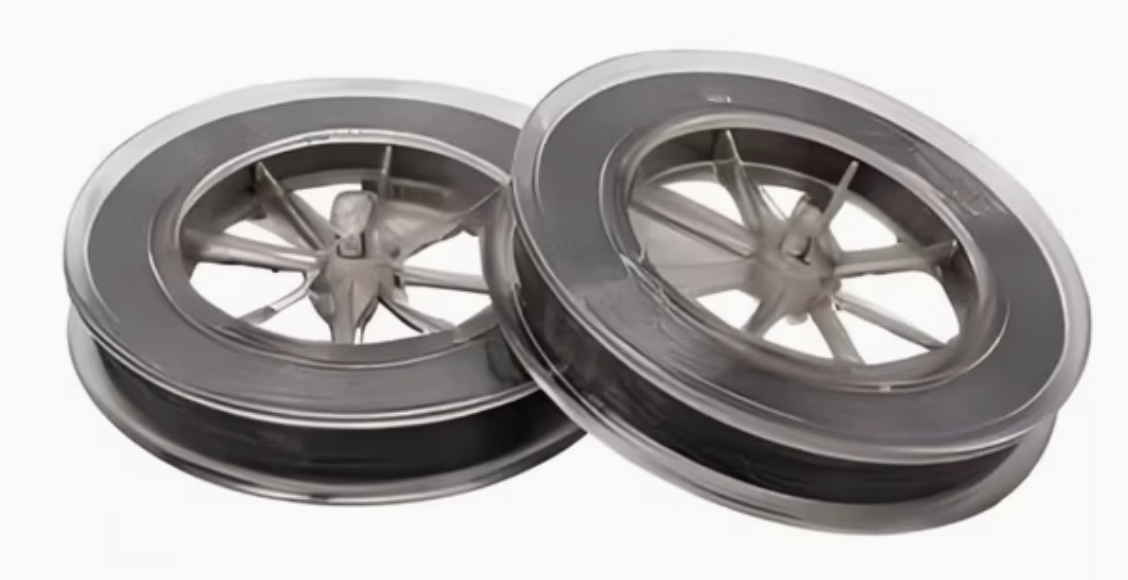
Tungsten Fine Wire for Sale
Tungsten fine wire is a high-purity metallic wire drawn to ultra-fine diameters (down to ~0.01 mm) that combines extreme heat resistance, high tensile strength, and dimensional stability. It’s widely used in precision EDM cutting, medical devices, cut-resistant textiles, and aerospace components where performance and reliability are essential.
- Ultra-fine diameters: 0.01–0.20 mm
- High melting point: 3410°C
- Surface: black or electro-polished
- 100% eddy-current flaw detection
Table of Contents
Â
What Is Tungsten Fine Wire?
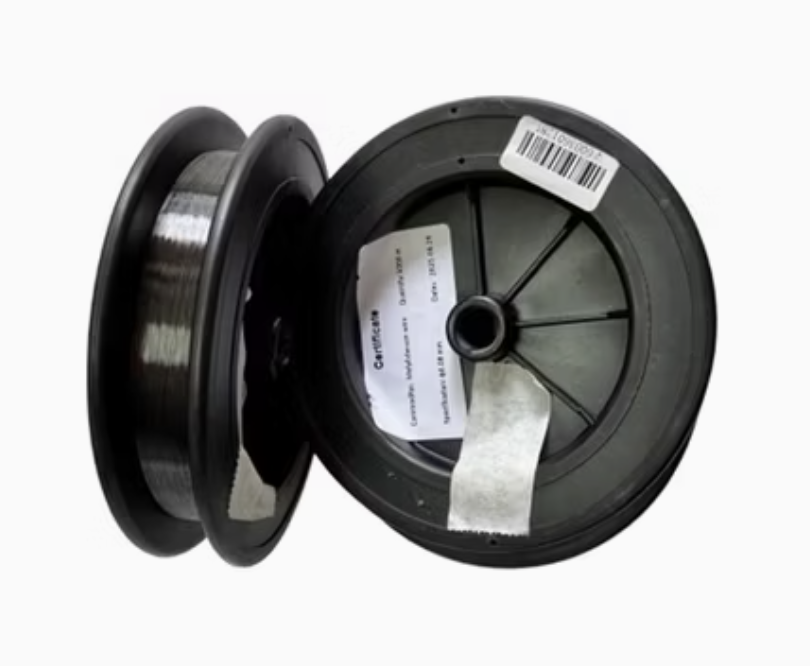
Tungsten fine wire is produced from high-purity tungsten material and cold-drawn through precision dies to reach ultra-small diameters used in specialized industrial applications. Because tungsten retains strength at very high temperatures and resists wear and fatigue, it is preferred where durability, dimensional accuracy, and thermal stability matter most.
Primary applications
- Wire EDM (electrical discharge machining) for high-precision cutting
- Medical devices and electrosurgical electrodes
- Cut-resistant gloves and reinforced protective textiles
- Aerospace sensors, coils, and high-temperature components
Available surface finishes
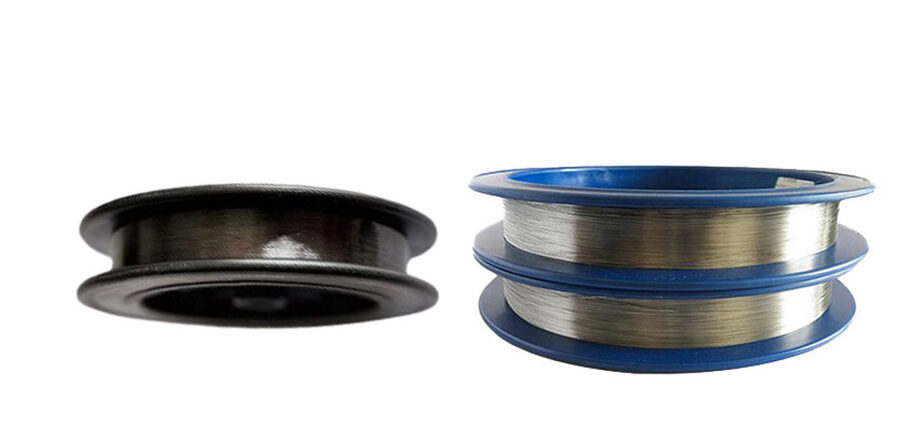
- Black surface —  its surface is coated with a thin layer of graphite lubricant applied during the wire-drawing process, which reduces friction and protects the wire, most used as safety gloves yarn.
- Electro-polished surface — bright, ultra-smooth finish (Ra ≤ 0.05 µm) for medical and micro-electronic uses where cleanliness and low roughness are required.
Â
Key Properties of Tungsten Fine Wire
Tungsten fine wire offers unmatched strength, conductivity, and heat resistance, essential for EDM cutting, medical devices, aerospace systems, and protective gloves.
Extreme Strength & High Melting Point
With a melting point of 3410 °C and tensile strength up to 4000 MPa, tungsten wire endures high stress and temperature — ideal for continuous EDM and aerospace use.
Excellent Conductivity & Thermal Stability
With resistivity around 5.65 μΩ·cm and a low expansion coefficient, tungsten ensures precise, stable performance in high-temperature electronics and heating elements.
Corrosion & Oxidation Resistance
Its strong atomic bonds protect against oxidation and corrosion. Electro-polished wire offers an ultra-clean finish for medical and electronic uses.
Precision & Surface Smoothness
Multi-pass drawing and laser control maintain ±0.001 mm tolerance. Electro-polished surfaces reach Ra ≤ 0.05 µm for consistent EDM and microelectronics performance.
How Yolo’s Manufacturing Process of Tungsten Fine Wire
Tungsten fine wire is manufactured through a series of high-precision metallurgical processes.
Each stage—from powder preparation to surface treatment—is tightly controlled to ensure uniformity, tensile strength, and flawless surface integrity.
The following steps summarize the modern production process followed by leading suppliers such as Yolomet and Plansee.
1. Powder Preparation
Â
2. Sintering and Rod Formation
Â
3. Swaging and Drawing
Â
4. Annealing and Stress Relief
Â
5. Surface Finishing
Â
6. Quality Control & Spooling
Applications of Tungsten Fine Wire in Key Industries
Wire EDM (Electrical Discharge Machining)
In EDM, tungsten fine wire is used as a cutting electrode. Its superior conductivity and tensile strength maintain stable discharge even at high temperature. Compared with brass or molybdenum wires, tungsten wire ensures higher precision and longevity, especially for fine mold cutting and aerospace alloy machining.
Medical Equipment and Implants
Medical-grade tungsten wire is widely used in catheters, stents, guidewires, and heating elements for electrosurgical devices. The electro-polished finish provides biocompatibility, corrosion resistance, and low surface roughness to prevent tissue irritation. Each lot is ultrasonically cleaned and spooled in a cleanroom to meet medical standards.
Cut-Resistant and Protective Gloves
Ultra-fine tungsten wire (0.02–0.05 mm) is woven with synthetic fibers to enhance mechanical cut resistance. Its extreme hardness improves protection against blades while maintaining flexibility. Compared with stainless steel filaments, tungsten wire offers higher durability and lower fatigue failure during repeated bending.
Aerospace and High-Temperature Components
In aerospace engineering, tungsten fine wire is applied in thermocouples, sensors, ignition coils, and plasma electrodes. Its stability at 2000°C+ and low thermal expansion ensure accuracy in extreme thermal conditions. Electro-polished versions are preferred for clean assembly in high-vacuum environments.
Tungsten vs. Molybdenum and Stainless Steel Fine Wire
Though tungsten, molybdenum, and stainless steel wires are all used for fine precision applications, their performance characteristics differ considerably. The table below summarizes key comparative data for engineers choosing materials for EDM, medical, glove, and aerospace uses.
| Property | Tungsten Wire | Molybdenum Wire | Stainless Steel Wire |
|---|---|---|---|
| Melting Point (°C) | 3410 | 2620 | ~1500 |
| Tensile Strength (MPa) | 2800–4000 | 2500–3200 | 1500–2000 |
| Electrical Conductivity | Excellent | Very Good | Moderate |
| Corrosion Resistance | Good (electro-polished) | Moderate | Excellent |
| Flexibility | Moderate | Good | Excellent |
| Cut Resistance (Gloves) | Outstanding | Good | Moderate |
| Cost Efficiency | Higher | Medium | Low |
For EDM machining and aerospace heating components, tungsten wire is unmatched due to its melting point and strength. Molybdenum wire offers good performance at lower cost, suitable for general EDM and electrical applications. Stainless steel wire remains a flexible and corrosion-resistant choice for cut-resistant gloves, though it lacks tungsten’s durability.
Choosing and Controlling the Quality of Tungsten Fine Wire
The reliability of tungsten fine wire depends heavily on stringent quality assurance during production.
Key control factors include inspection and testing standards, raw material granularity, drawing process precision, and logistics consistency.
Below outlines how Yolo maintain the highest standards.
Inspection and Testing Standards
- Eddy Current Testing: Detects sub-surface flaws and cracks with 100% line-by-line inspection.
- Surface and Crack Inspection: Visual and optical magnification checks identify oxidation spots or surface damage.
- Diameter and Tolerance Verification: Automated laser measurement ensures ±0.001 mm dimensional accuracy for each production batch.
Material and Manufacturing Quality Factors
- Raw Material Granularity: High-purity tungsten powder with uniform grain size (< 1 µm) minimizes internal voids and cracking risk.
- Drawing Process Precision: Multi-stage drawing with precision dies and temperature-controlled lubrication ensures smooth, consistent wire surfaces.
- Annealing Consistency: Periodic annealing under controlled hydrogen atmosphere maintains ductility while preventing brittleness.
Production and Delivery Assurance
- Batch Traceability: Each spool is labeled with lot number, diameter, and test data for full traceability.
- Quality Certification: Manufacturers typically comply with ISO 9001, ASTM B760, and internal metallurgical standards.
- Lead Time and Logistics Reliability: Large inventory of semi-finished tungsten rods allows short production cycles and stable delivery times.
Packaging and Supply Capabilities
Proper packaging and handling ensure tungsten fine wire arrives at the customer’s facility with pristine surface quality.
As a precision product, packaging is designed to prevent contamination, bending, or tangling during transit and storage.
Standard Supply Forms
- Spools ranging from 50 m to 10,000 m length
- Coiled wire in sealed plastic cases
- Straight wire cut lengths for laboratory or medical use
- Custom diameters from 0.01 mm to 0.20 mm available
Protective Packaging
- Anti-static, vacuum-sealed spools for cleanroom compatibility
- Desiccant and inert-gas packing to prevent oxidation
- Shock-proof wooden crates for international air or sea shipping
Why Choose a Chinese Tungsten Fine Wire Manufacturer?
China leads the global tungsten supply chain, accounting for over 80% of raw tungsten production and advanced wire drawing facilities. Partnering with a professional Chinese manufacturer provides measurable advantages in cost, technical capability, and supply reliability.
- Comprehensive Material Control: In-house powder metallurgy and sintering ensure stable quality and full traceability.
- Competitive Pricing: Local access to tungsten ore and optimized manufacturing lowers cost without sacrificing precision.
- Advanced Equipment: CNC drawing systems, hydrogen annealing, and eddy current inspection deliver consistency rivaling Western suppliers.
- Custom Solutions: Flexible OEM/ODM production supports specific wire diameters, spool types, and surface finishes.
- Export Experience: Decades of experience supplying Europe, North America, and Japan ensures compliance with global standards.
Conclusion
Tungsten fine wire combines unmatched strength, thermal stability, and precision.
Whether for EDM cutting, surgical tools, cut-resistant gloves, or aerospace sensors, its superior mechanical and surface properties ensure reliable performance.
Partnering with an experienced Chinese manufacturer like Yolomet guarantees quality, consistency, and on-time delivery for your project.
FAQs
- Q1: What is the thinnest tungsten wire available?
Manufacturers like Yolomet produce diameters as fine as 0.01 mm with ±0.001 mm tolerance. - Q2: Can tungsten wire be used in medical applications?
Yes. Electro-polished tungsten wire is biocompatible and used in guidewires and heating elements. - Q3: How does tungsten compare to stainless steel for gloves?
Tungsten offers higher hardness and longer fatigue life, providing superior cut resistance than stainless filaments. - Q4: What’s the typical lead time for custom orders?
Standard sizes ship in 2–3 weeks; custom diameters or coatings may take 4–5 weeks. - Â
- Q1: What is the thinnest tungsten wire available?